
Breed examples (use these as “starting points”)
Breeds vary, but coat type still rules the schedule. Here are realistic starting points for common coat categories:
Short coat / smooth coat
Examples: French Bulldog, Pit Bull, Doberman, Beagle, Boxer
- Brush: 1–2 times per week
- Bath: every 3–6 weeks
- Pro grooming: every 6–10 weeks (or DIY baths + periodic nails)
Florida tip: Short coats can still shed heavily. Use a rubber curry brush weekly and add a quick wipe-down after wet walks.
Double coat
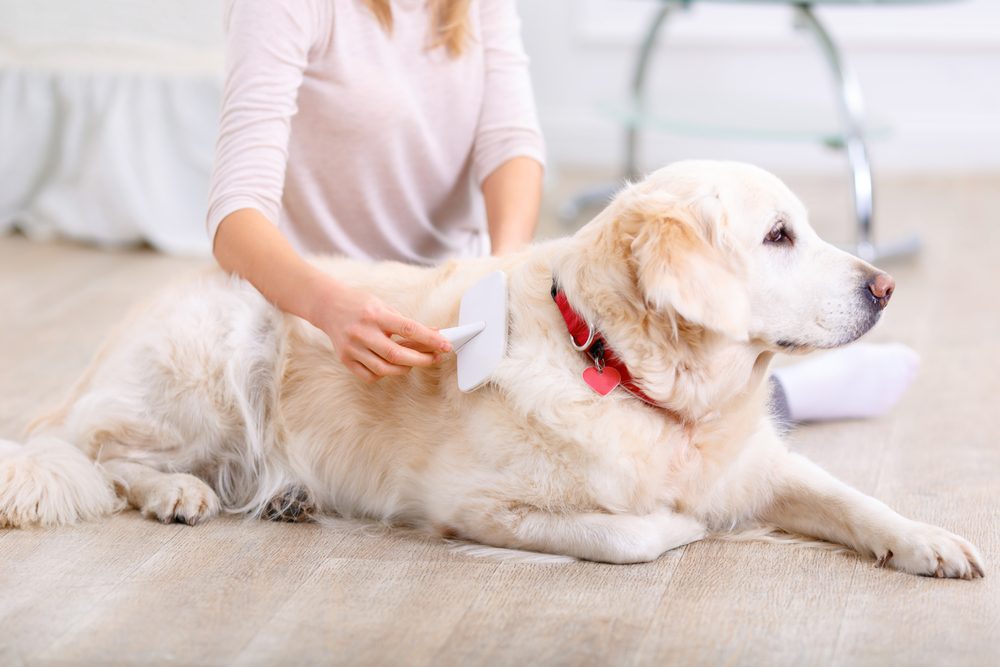
Examples: Golden Retriever, Labrador (often dense), German Shepherd, Husky, Pomeranian
- Brush: 3–5 times per week (daily during heavy shedding)
- Bath: every 4–8 weeks
- Pro grooming: every 6–10 weeks with de-shedding focus
Florida tip: Many double coats “blow coat” seasonally, but in warm areas it can feel continuous. Consistent de-shedding helps keep the undercoat from compacting and trapping moisture.
Curly / doodle / poodle coats
Examples: Poodle, Goldendoodle, Labradoodle, Portuguese Water Dog
- Brush: daily (especially friction areas)
- Bath: every 2–4 weeks
- Pro grooming: every 4–6 weeks (often required)
Florida tip: Curly coats can mat quickly after rain, swimming, or humid days. Drying thoroughly and brushing after moisture exposure is crucial.
Long, silky coats
Examples: Yorkie, Maltese, Shih Tzu, Lhasa Apso (varies), Havanese
- Brush: daily or every other day
- Bath: every 2–4 weeks
- Pro grooming: every 4–6 weeks (often including trims)
Florida tip: If your dog plays outdoors daily, you may need more frequent baths and face/feet trims to prevent staining and tangles.
What “grooming” includes (so your schedule makes sense)
People often think grooming = a haircut. In reality, a healthy routine includes:
1) Brushing and combing (the foundation)
Brushing prevents mats, reduces shedding, and distributes natural oils.
High-friction mat zones to check daily:
- Behind ears
- Under collar/harness
- Armpits
- Groin/belly
- Tail base
- Inner legs
- Between toes
If you can’t easily run a comb to the skin in these areas, your dog may already be tangling.

2) Bathing (clean coat + healthy skin)
Overbathing can irritate skin if products are harsh. Underbathing can allow oil, yeast, and allergens to build up.
Best practice: Use a dog-specific shampoo/conditioner appropriate for your dog’s skin and coat, and rinse thoroughly. Residue is a common cause of itchiness.
3) Nails (often overlooked)
Many dogs need nail trims every 2–4 weeks, regardless of coat type.
Signs nails are too long:
- Clicking on floors
- Toes splaying outward
- Reluctance to walk or jump
- Nails curling
4) Ears, eyes, paws
In Florida, ear care can be especially important for dogs that swim or get wet often. Paw pads also collect sand, pollen, and debris.
Florida lifestyle adjustments: how to modify your schedule
Use this section to “personalize” the routine.
If your dog swims (pool, beach, lake)
- Rinse after every swim
- Dry thoroughly (especially ears, armpits, belly)
- Consider a bath every 2–4 weeks if swimming is frequent
- Increase brushing to prevent tangles after moisture exposure
If your dog has allergies or itchy skin
- Brush more often to remove allergens
- Consider more frequent gentle baths (as advised by your vet)
- Keep coat clean and fully dry
- Watch for hot spots (red, moist, irritated patches)
If your dog is very active outdoors
- Wipe down paws/belly after walks
- Check for ticks and burrs
- Brush more frequently to prevent debris from compacting the coat
“How often should I get a haircut?”
Haircut frequency depends on coat type and your preferred length.
- Curly/wavy & long coats: Typically every 4–6 weeks (especially if kept longer)
- Medium coats: Often every 6–8 weeks for shaping, sanitary trims, and maintenance
- Double coats: Usually no haircut, but regular de-shedding, outline trims, and hygiene trims can help
- Short coats: Haircuts not needed; focus on baths, brushing, nails
Note on double coats: Shaving a double-coated dog is generally discouraged unless medically necessary and recommended by a vet, because the undercoat can regrow unevenly and reduce coat function.
A simple “starter plan” you can follow today
If you’re not sure where to begin, use this:
Brush:
- Short coat: 1–2x/week
- Medium/double: 3x/week
- Curly/long: daily
2. Bath: every 4 weeks (adjust up/down based on skin and odor)
3. Nails: every 3 weeks
4. Professional grooming:
- Short coat: every 8–10 weeks (or as needed)
- Medium/double: every 6–10 weeks
- Curly/long: every 4–6 weeks
Then refine based on coat condition.
When to increase grooming frequency (red flags)
Move your schedule up if you notice:
- Tangling behind ears or under harness
- Strong odor returning within 1–2 weeks of bathing
- Itching, redness, or flaky skin
- Heavy shedding clumps around the home
- “Grinch feet” (hair covering paw pads) causing slipping
- Nails clicking on floors
These are signs your dog needs more consistent maintenance.
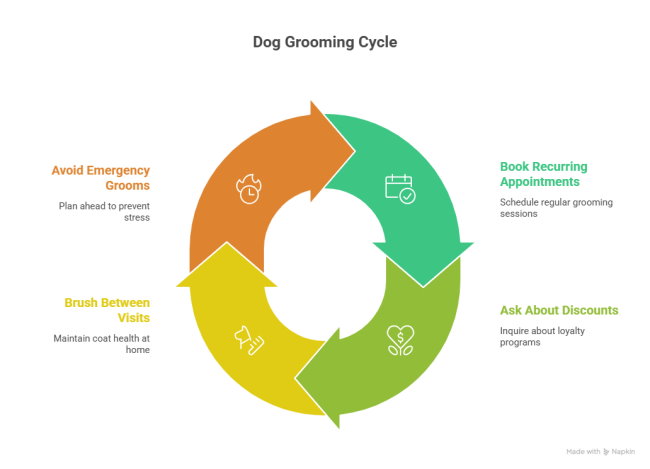
Booking tip for best results
If you want an easy routine, align your appointments with your dog’s coat type:
- Curly/long coats: book on a repeating 4–6 week cadence
- Medium/double coats: a repeating 6–10 week cadence often works well
- Short coats: periodic maintenance + nails can be enough
If you operate V.I.P. Pets Salon’s site, place a clear CTA near the end of the post like:
- “Schedule a grooming appointment”
- “Request a quote”
- “Call/text us for a coat assessment”